Program complete, 2025 to 2026

We taught 240,000 kids the things nobody teaches them.

Skyll finds new ways to teach the subjects that classrooms have never been good at. Online safety. Judgment under pressure. The decisions young people make when no adult is watching. West Virginia hired us to solve one of those problems for an entire state, and this page is the record of how it went.

Program record
Client
WV Dept. of Education
Mandate
Senate Bill 466
Grades
3 through 12
Students reached
240,000
Titles delivered
2
Term
One school year
Status
Delivered
The case study

A state with a law to fulfill and no good way to teach it.

In November 2025, a 15-year-old West Virginia student took his own life within hours of being targeted in an online sextortion scheme. Predators contact teenagers through games and social apps, build trust, ask for photos, then threaten to send those photos to everyone the child knows. Kids panic. Most tell no one.

The law

Senate Bill 466 made it mandatory

Every public school student in grades 3 through 12 had to receive real internet safety education. Not an assembly. Not a one-time talk. A curriculum covering grooming, catfishing, sextortion, AI scams and cyberbullying.

The standard

Seven standards, written by the Safe Surfin' Foundation

The Cyber S.W.A.T. framework required students to understand privacy risk, recognize predator behavior, know copyright law, find reporting resources, and actually change how they behave online.

The gap

Nobody knew how to deliver it

Assemblies where adults lecture at kids do not stick. Worksheets about digital citizenship get filed and forgotten. The state had a requirement and a deadline, and no format teenagers would sit through willingly.

The build

We made it something they wanted to play

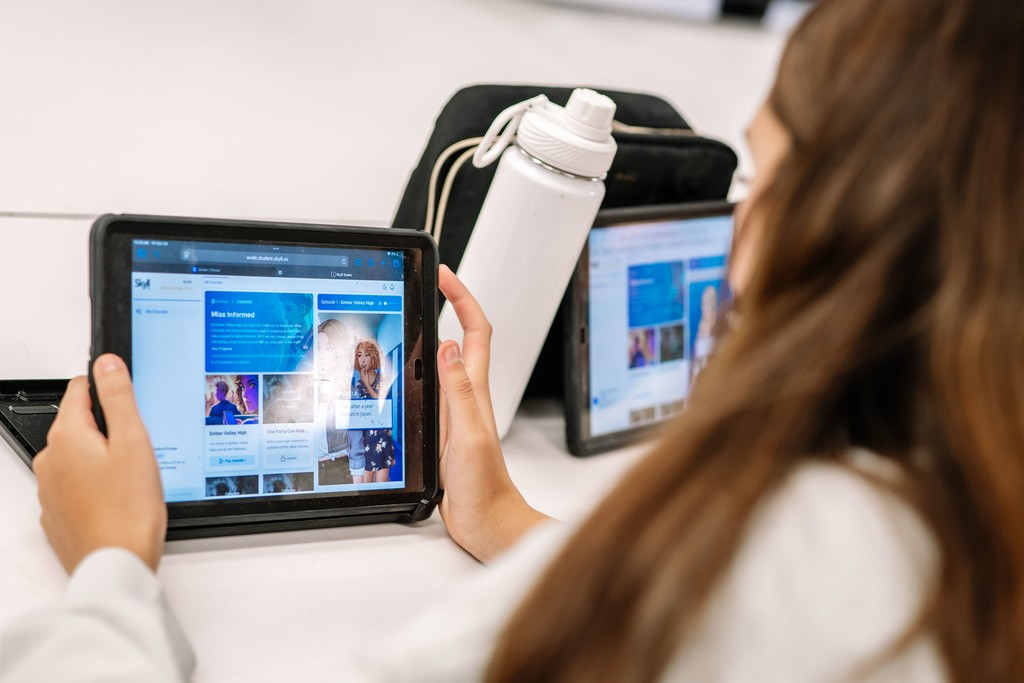
Skyll built two interactive stories where the student is the main character. We call them Movie Games. The story plays like a series, and at every dangerous moment the player makes the call and watches what their choice does.

"Kids feel like they have no options, they're in a panic. Those poor children didn't know what to do, and probably had never heard of a situation like this."
Senator Laura Chapman, sponsor of Senate Bill 466

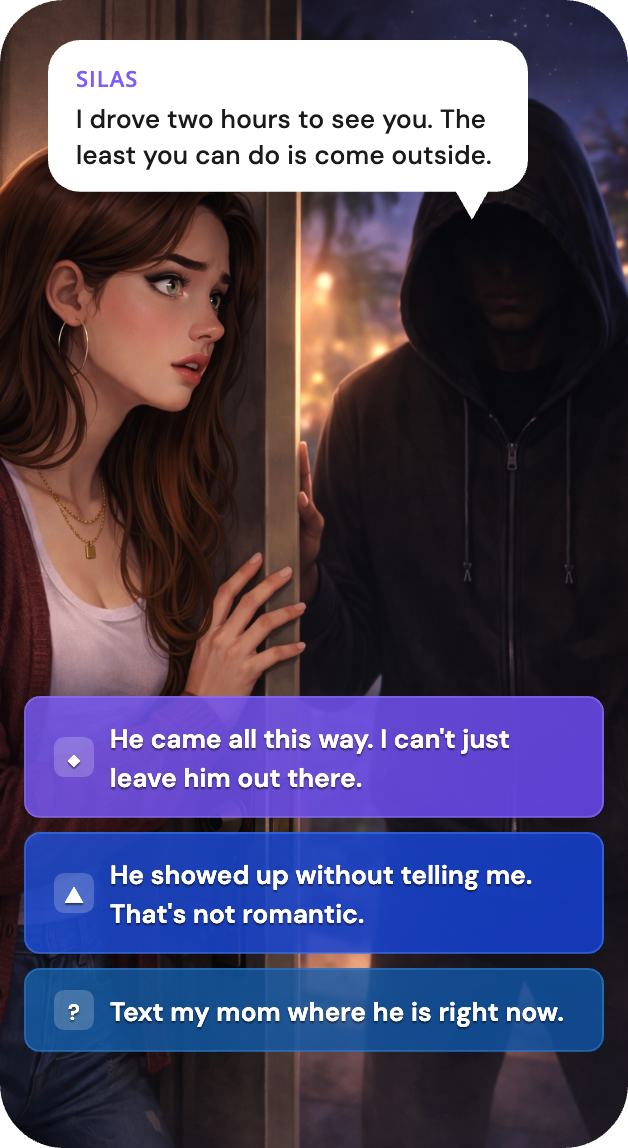
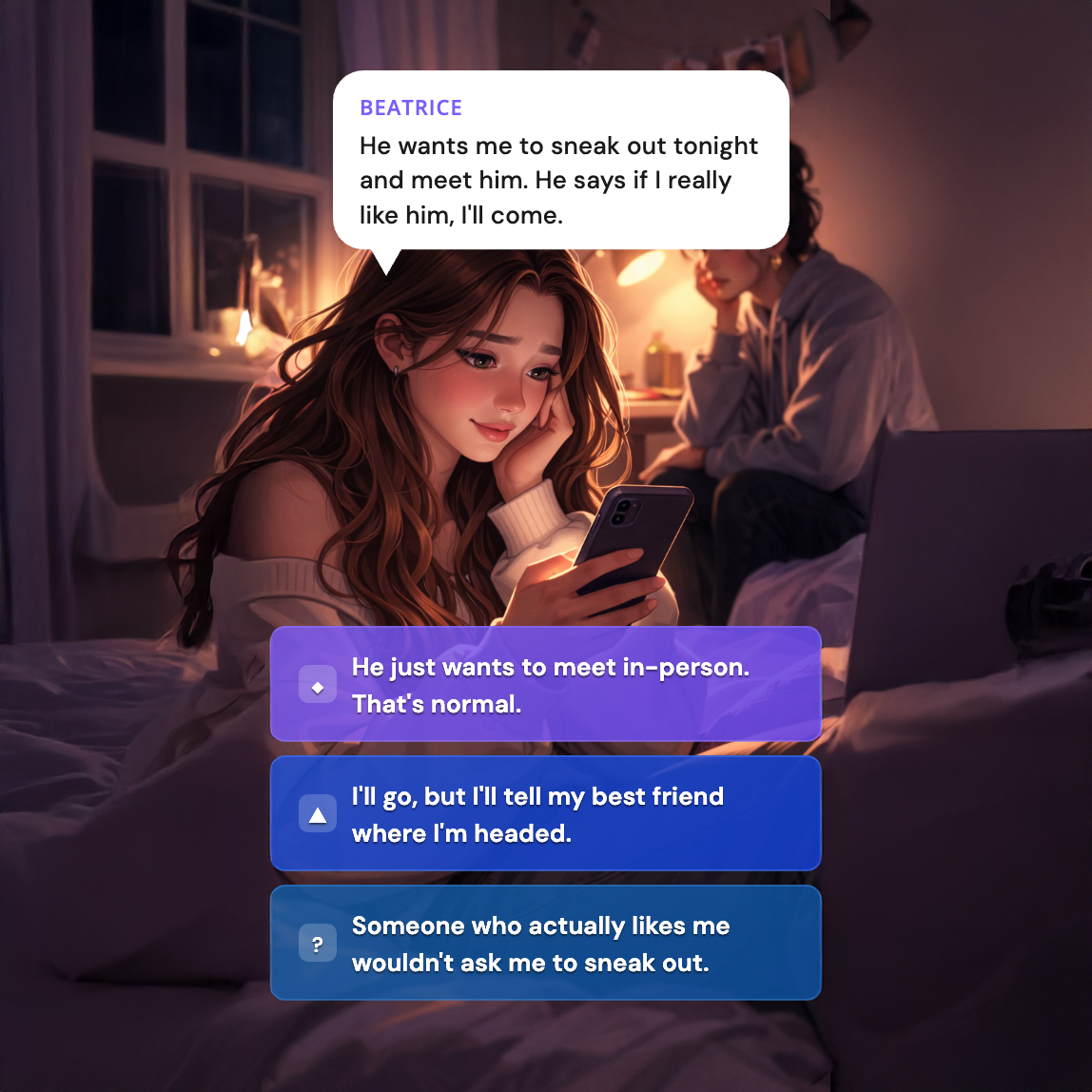
When a player chooses wrong, they see it play out. A predator shows up at the door. A friend ends up on a rooftop. A reputation gets destroyed. Then they go back and try again. That repetition is the whole point. It is not a lesson about danger, it is a rehearsal for it.

What we delivered

Two titles, covering every grade in the state.

Both were written, filmed, branched and shipped for the same school year, then deployed through every district in West Virginia. A student opens a story, meets a situation that could happen to them this week, and decides what to do about it.

A Skyll Movie Game
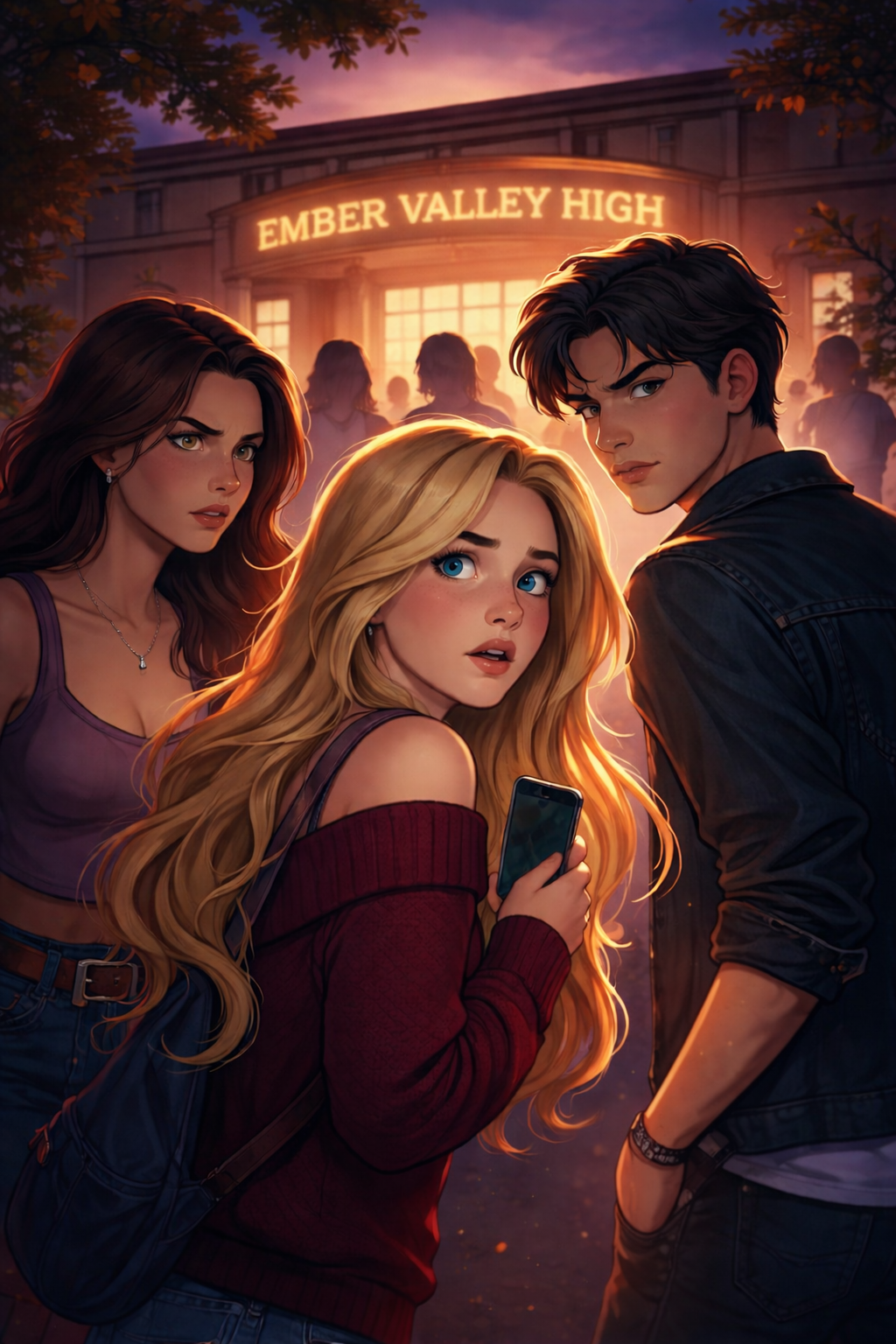
Miss Informed: Ember Valley
Grades 6 to 12  ·  Six chapters  ·  90+ minutes

Miss Informed Ember Valley

Students play a junior at Ember Valley High, where an anonymous account called Miss Informed is exposing secrets and wrecking lives. Across six chapters they meet the same threats real teenagers meet every week.

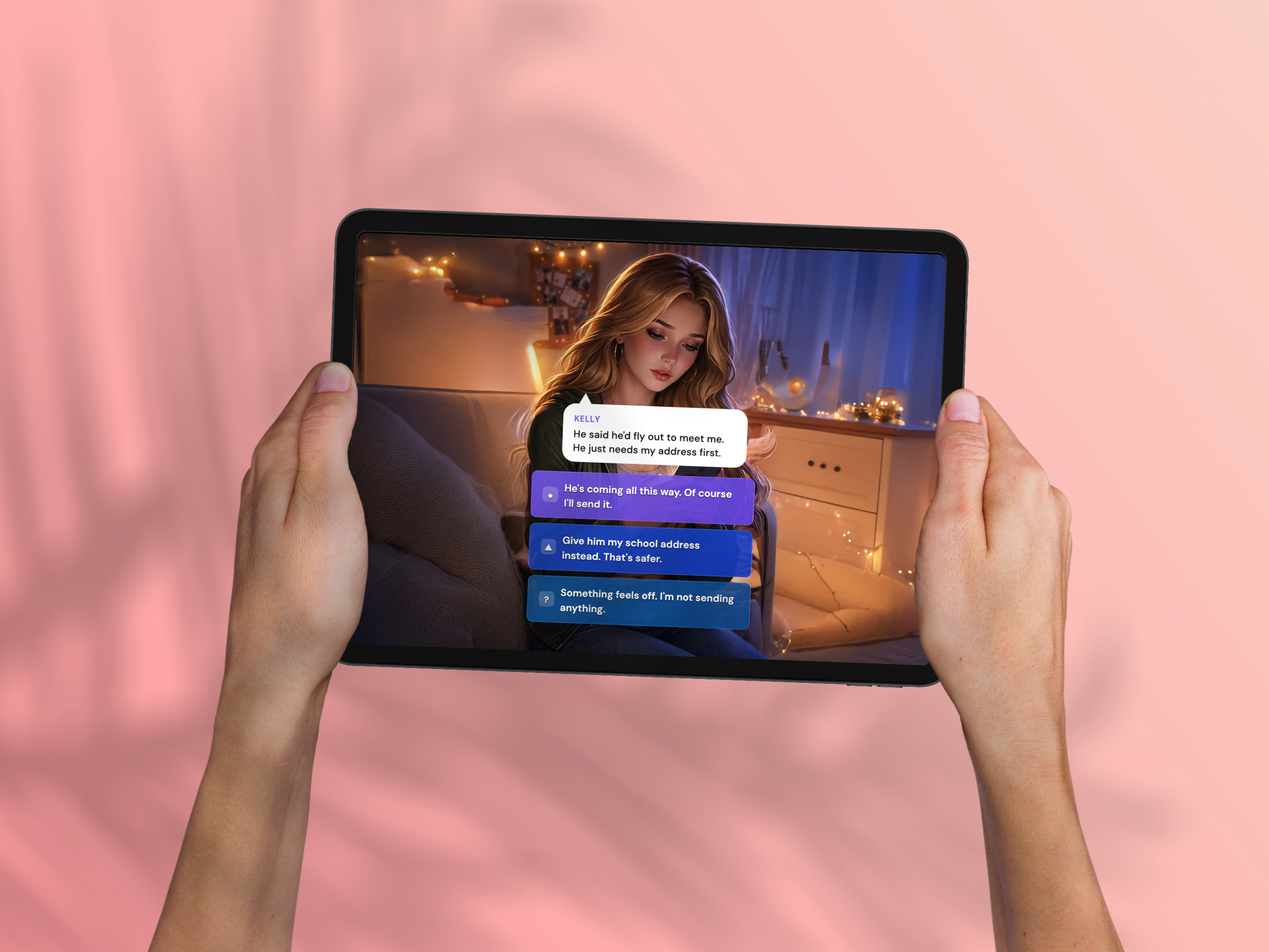
The catfish Their crush has been messaging for weeks and now wants to meet. Share the address and a predator arrives. Refuse, report and block, and they learn the profile was built on stolen photos.
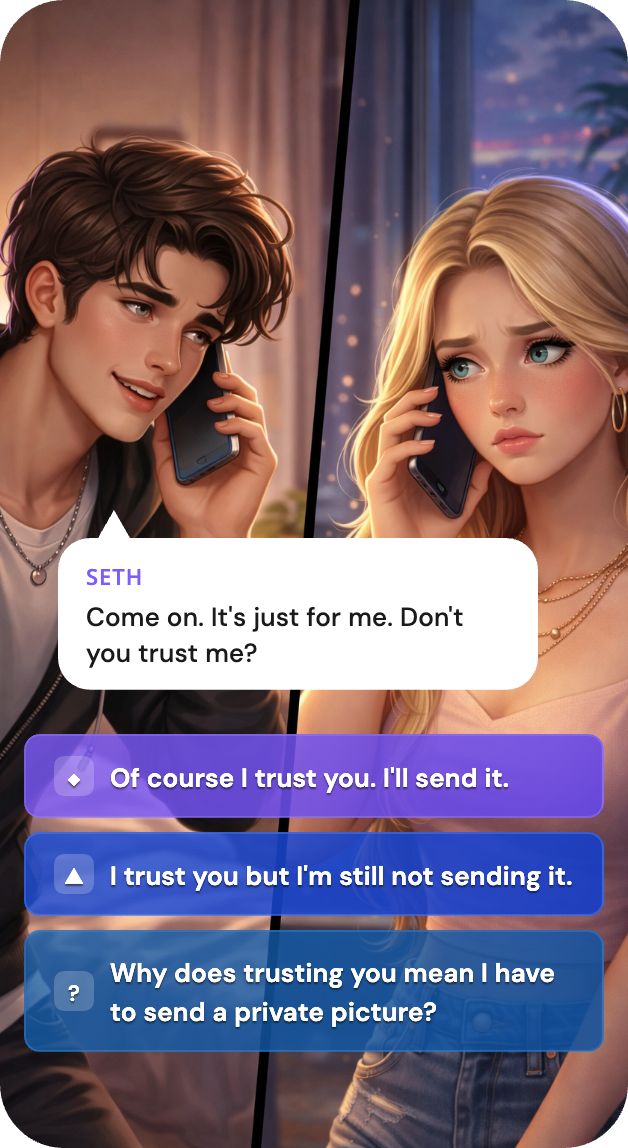
The sextortion crisis A friend is being extorted over intimate photos. Advise them to pay and the demands never stop. Say there is a way to fight back and the player learns about CyberTipline and Take It Down.
The AI voice clone An unknown number calls. Answer and scammers clone the player's voice, then phone their parents with a fake kidnapping. Stay silent and the scam collapses.
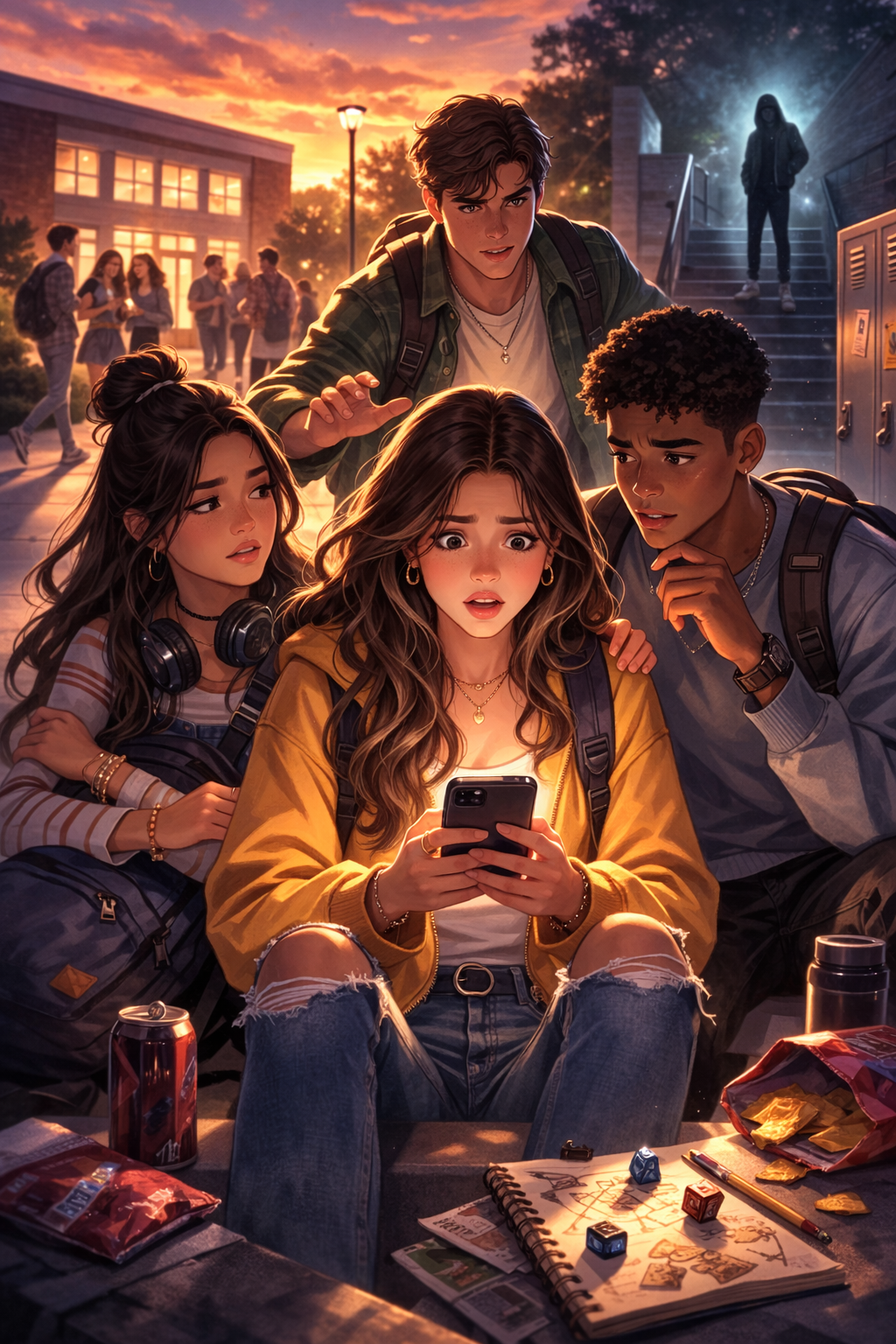
RealmQuest
Grades 3 to 5  ·  Three chapters  ·  30+ minutes

RealmQuest

Younger students play a kid who loves an online multiplayer game with their friends. At lunch a new player called ShadowFox joins the server, and the friendly gaming turns into something else.

Too nice, too fast Excessive flattery and special attention aimed at one child.
Free gifts and favors Items, game currency and promises handed over for nothing.
Personal questions Location, school, age and what they look like.
The push to go private A different app, a secret chat, a conversation that is just the two of them.
A moment from a Movie Game
A scene from a Movie Game
A choice from a Movie Game

The story ran on whatever device the school already had, Chromebooks included.

The outcomes

Every question we asked, and what students said.

After each chapter, students completed a self-reported behavioral assessment. This is the complete set of results, not a selection of the good ones.

Privacy and sharing
Less likely to share private photos or personal information online
88%
More careful about posting personal photos, videos or stories publicly
96%
Recognizing danger
More likely to recognize suspicious or dangerous online activity
91%
More likely to question whether a profile or message is real
92%
More likely to recognize a scam, exploitation or sextortion attempt
96%
Understanding consequences
More aware that hurtful comments cause real harm to real people
92%
More aware that sharing explicit images has serious legal consequences
94%
More aware that reposting other people's content can have legal consequences
94%
More aware that posts, likes and shares cause real-world harm
96%
Reporting and finding help
More aware of resources for removing explicit images and reporting exploitation
93%
More likely to report suspicious or dangerous behavior to authorities
95%
More likely to report online issues instead of handling them alone
95%
More aware of how to report online threats and find help
96%
Talking to trusted adults
More likely to talk to a parent, teacher or trusted adult about online concerns
95%
More aware of what to do when a suspicious or unknown number calls
95%
More aware of resources like the Cyber Tipline for sextortion victims
95%
Behavioral change
Less likely to meet someone in person they only know online
90%
More likely to call for help rather than film during an emergency
93%
More aware of victim-shaming and why it is harmful
94%
Less likely to join in harmful online behavior or pile-ons
94%
More likely to think about how their words online affect others
93%

Self-reported student assessments collected after each chapter across grades 3 through 12, West Virginia, 2025 to 2026.

80%+

of students voluntarily played the optional bonus content. Nobody made them. They wanted more of it, which almost never happens with a school program.

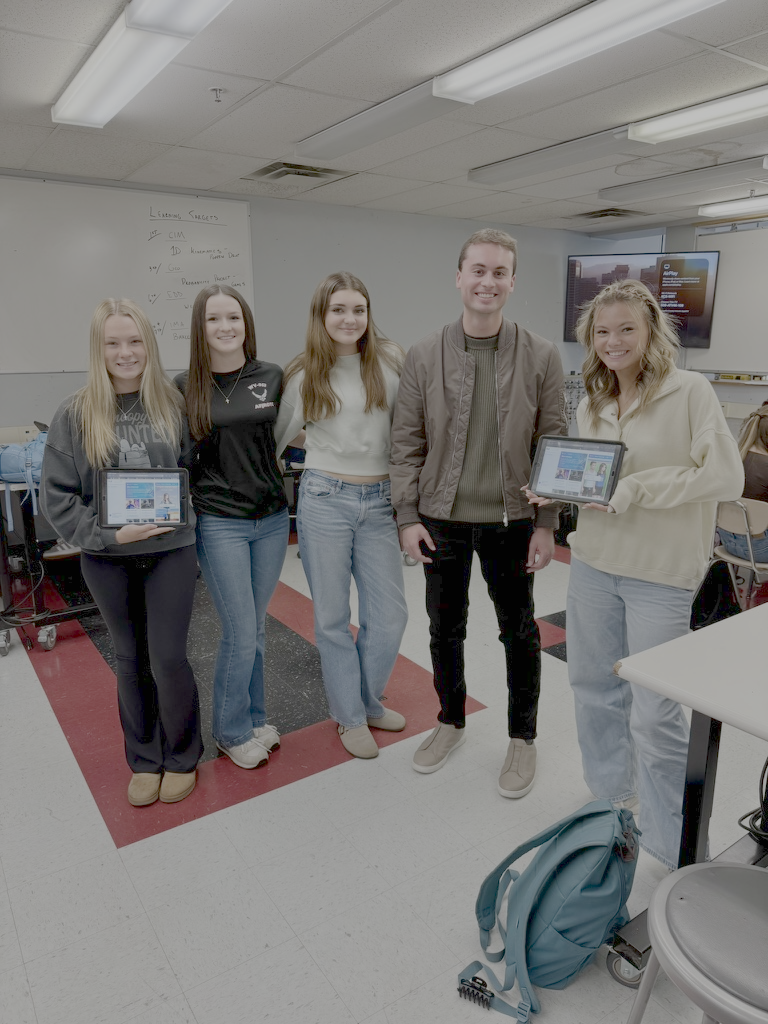
240,000 students across every district in West Virginia, playing as part of the school day.

"Students have been excited and said this is the best tool they have had to learn about internet safety because it's so much better than having to sit through a class and just someone lecturing them."
Michele Blatt, West Virginia State Superintendent
What we build

The West Virginia program is finished. The method is not.

Skyll is a small studio that takes on one project at a time. The work usually starts the same way, with a subject that matters and an audience that has stopped listening. If that sounds like your problem, we would like to hear about it.

🏫

Schools, districts and states

A mandate to meet, a subject students tune out, or a curriculum that exists on paper and nowhere else. We design the thing that actually gets played, and we build it to report on itself.

🛍️

Retail and brands

Staff training, customer education and safety messaging that people finish. The same interactive story approach works for anyone who needs a lesson to survive contact with a real audience.

🤝

Agencies and nonprofits

Public awareness work with a number attached to it. We built West Virginia's program alongside the Safe Surfin' Foundation and measured every outcome, and we would work the same way again.

Not a lecture. A rehearsal.

One state, one school year, 240,000 students, and the first real proof that interactive storytelling can do what assemblies and worksheets could not. If you have a problem shaped like that one, write to us and we will tell you honestly whether we are the right people for it.

info@skyll.us

We worked with